

Key Takeaways
- Partial dentures replace some missing teeth, not a full set, and come in 3 main types: Acrylic, cast metal, and flexible.
- They can make chewing and speaking easier while helping restore the space left by missing teeth.
- Many partial dentures can last for years, but lifespan depends on the appliance, fit, care, and changes in your mouth.
- There’s an adjustment period after getting partials, and the dentist can fine-tune the fit over time.
Partial Dentures
Losing a few teeth can affect more than your confidence: It can make eating uncomfortable, change how you speak, and cause your remaining teeth to shift out of place over time. At Embrace Dental, we know that missing multiple teeth can be stressful, but we’re here to talk with you about your options.
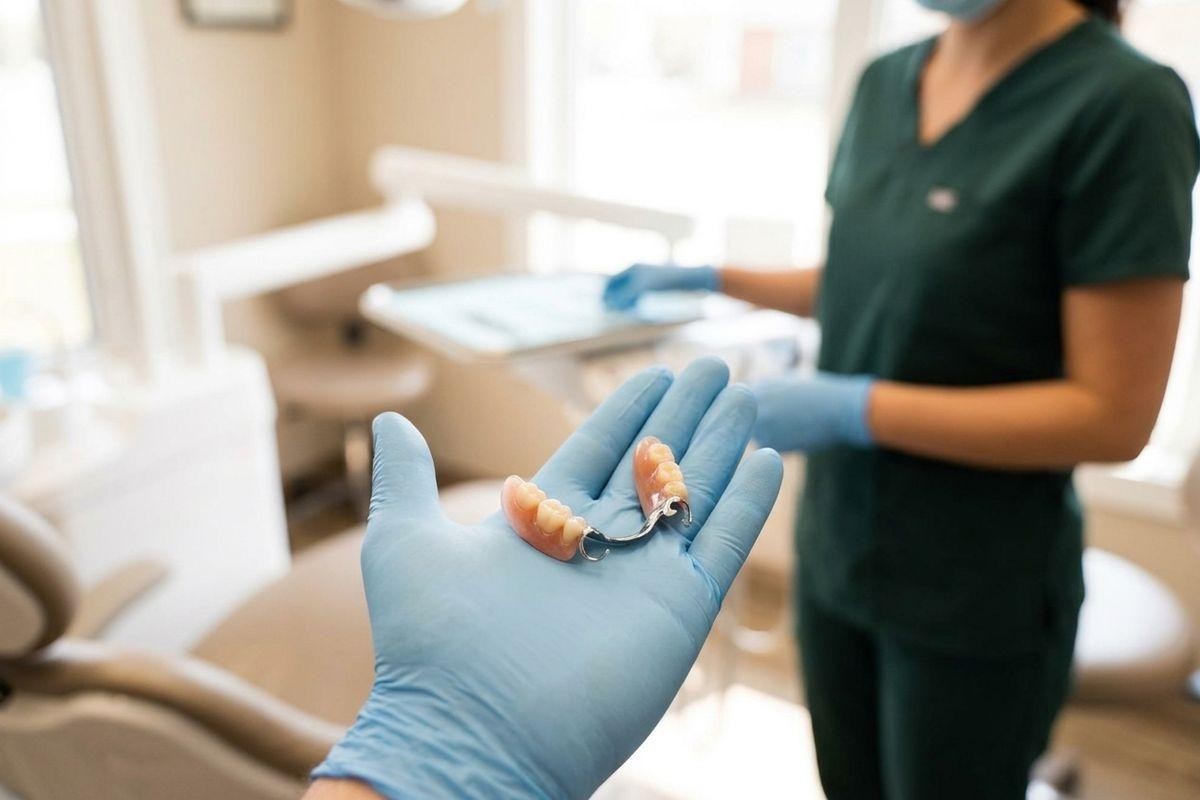
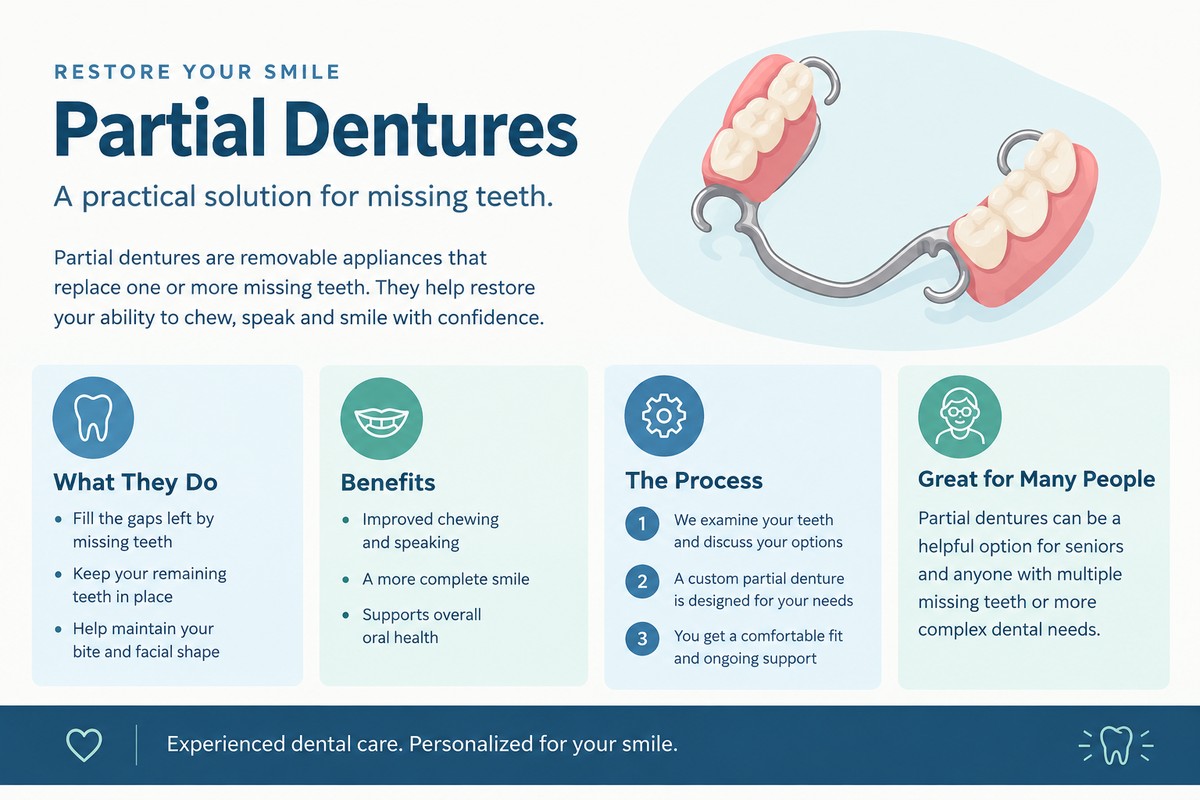
Partial dentures are removable dental appliances that replace multiple missing teeth when you still have some natural teeth left. They’re designed to blend in with your remaining teeth and help you get back to eating, talking, and smiling with more comfort.
Types of Partial Dentures to Know About
Not all partial dentures are made the same. The right type of denture depends on your oral health, your budget, and whether you have any material sensitivities. A dentist can walk you through which option fits your situation, but here’s a breakdown to get you started.
Acrylic Partial Dentures
These use a pink acrylic base and may use clasps that attach to your natural teeth. Depending on the situation, they can sometimes be more affordable and are often used as a temporary solution while a longer-term option is being prepared.
Cast Metal Partial Dentures
Cast metal partials use a lightweight metal frame covered with tooth-coloured resin. They’re sturdy and can often hold more replacement teeth than acrylic versions. For many people, this is a reliable long-term choice.
Flexible Partial Dentures
Made from a flexible thermoplastic material, flexible partials do not use visible metal clasps and may feel less noticeable for some people. Whether they are suitable depends on your oral health, the design needed, and your goals.
Partial Dentures vs. Other Tooth Replacement Options
Partial dentures aren’t the only way to replace missing teeth. Depending on how many teeth you’re missing and where they are, our dentist might also discuss bridges or full dentures with you.
Dental Bridges
A bridge is a fixed replacement supported by neighbouring teeth or dental implants, so it cannot be removed at home. It can replace one or more adjacent missing teeth and may suit someone seeking a longer-term option. With good care, a bridge can generally last around 10 years, sometimes longer.
Full Dentures
Full dentures replace all teeth on an upper or lower arch. If some teeth remain, your dentist will determine whether they should be retained or removed as part of the treatment plan. If healthy teeth can be kept, a partial denture may be the more tooth-friendly option because keeping your natural teeth is usually preferred.
How to Care for Your Partial Dentures
Taking care of your partials is straightforward once you get into a routine. Good daily habits go a long way toward keeping them fitting well and lasting longer. With proper care and regular dental visits, partial dentures can often last for many years, though their lifespan varies depending on the type of appliance and changes in your oral health over time.
Try to follow these cleaning and storing tips for dentures:
- Remove your partials each night and soak them in a denture-friendly cleaning solution to reduce bacteria buildup.
- Brush your remaining natural teeth carefully around where the denture clasps sit, since those areas can collect plaque.
- Rinse your partials after meals when possible to keep them clean throughout the day.
- Handle them over a folded towel or a sink with water to avoid damage if they’re dropped.
What to Expect When You Visit the Dentist
Your First Appointment with the Dentist
At your first visit, our dentist can take a close look at your gum health, check for any bone loss, and get a full picture of your oral health. But aside from a standard oral health check, this appointment is also a conversation. You’ll talk through your goals, what you’re comfortable spending, and any material allergies you have. Our team will take our time so that we find the right approach for your specific situation.
Getting Used to Your New Partial Dentures
Some soreness can happen while you adjust to new dentures. Our team can make small fit adjustments if needed, and many people find that wearing their partials feels more natural over time.
Visit Embrace Dental to Talk About Your Options
If missing teeth have been affecting your daily comfort, partial dentures might be a practical, manageable solution to explore. Our team takes time to understand your needs and works with you to find an option that fits your life. Schedule a consultation and take the first step toward a more comfortable smile.