

Most people know that gum disease is an infection caused by harmful bacteria. Since bacteria can spread from person to person, it’s natural to wonder if you can “catch” periodontal disease from someone else.
While you can’t catch gum disease like a cold or the flu, the specific bacteria that cause it could be passed from person to person. This transfer usually happens through saliva, but getting exposed to the bacteria doesn’t automatically mean you’ll develop the condition. By maintaining a thorough routine of brushing, flossing, and professional cleanings, you can effectively manage these bacteria and keep your gums healthy.
What Is Gum Disease?
Gum disease is an infection that harms the soft tissue and bone that support your teeth. It all starts with plaque, a sticky film of bacteria that forms on your teeth. Plaque begins to form the moment you finish eating or drinking, as the natural bacteria in your mouth settle onto your teeth and feed on leftover sugars and starches. As these bacteria thrive, they produce acids and a sticky, colourless film known as a biofilm, which allows the bacteria to cling to your tooth surfaces and along the gumline.
If this soft film isn’t regularly brushed or flossed away, it continues to thicken and trap minerals from your saliva. Over time, this process causes the plaque to harden into tartar, which is much more difficult to remove and provides a perfect hiding spot for even more bacteria to grow.
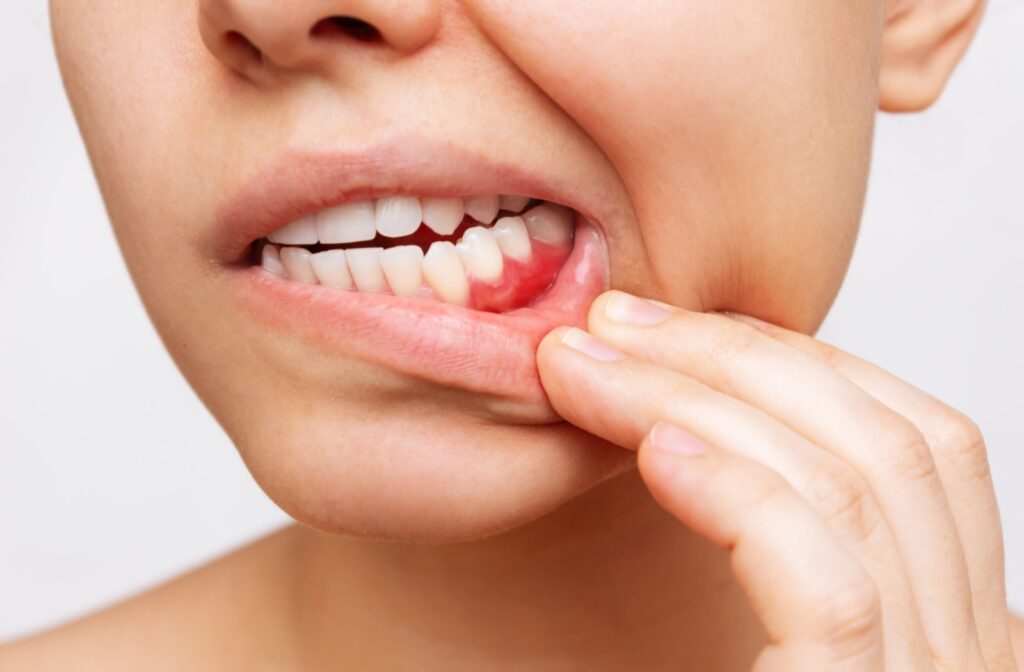
Gum disease typically progresses in 2 stages. The first stage is known as gingivitis. You may notice that your gums look red or swollen, and they might bleed when you brush. The good news is that with proper care, you can often reverse gingivitis.
If left unaddressed, it can progress to periodontitis. This is a more serious form of gum disease, in which the infection can damage the bone that holds your teeth in place. It requires a different approach to manage its effects.
How Gum Disease Bacteria Spread
The bacteria responsible for gum disease live in your mouth. They can travel from one person to another through direct contact with saliva. This can happen when you kiss someone or share things like a toothbrush, fork, or drinking glass.
Just because you come into contact with these bacteria doesn’t mean you’ll get gum disease. Your own oral health routines and your body’s response play a considerable part. A healthy mouth is much better at defending itself against harmful bacteria and contributes to your overall well-being.
Common Signs of Gum Disease
Knowing the signs of gum disease can help you take action early. If you experience any of the following, it’s a signal to book a comprehensive dental exam:
- Gums that appear red, puffy, or tender
- Bleeding from your gums when you brush or floss
- Bad breath that doesn’t go away
- Gums that look like they are pulling back from your teeth
- Teeth that feel loose or sensitive
- Pain or discomfort when you chew
How to Protect Your Gums and Health
A few consistent habits can make a big difference in keeping your gums in good shape. Simple, daily actions are your first line of defence against plaque buildup and the spread of unwanted bacteria.
Your routine at home is the foundation of good oral health. Following proper brushing and flossing techniques helps clear away plaque. Flossing once a day helps clean the tight spaces between your teeth where your brush can’t reach.
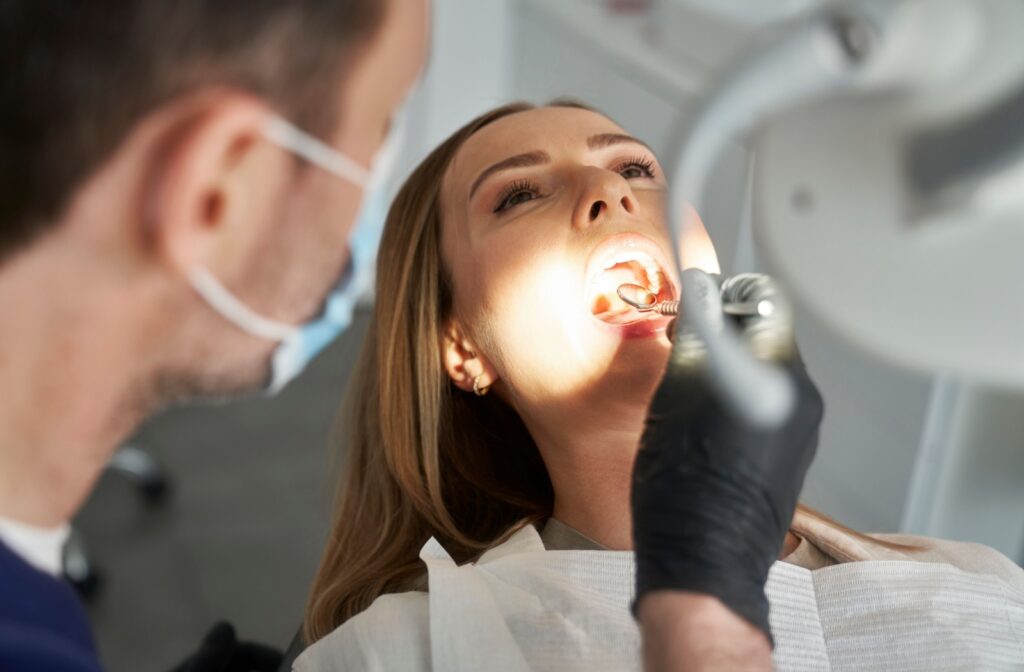
Even with excellent home care, plaque can harden into tartar, which you can’t remove on your own. Regular appointments with a dentist for professional cleanings are key to removing this tartar. A dental team can also spot the earliest signs of trouble.
What to Do If You Have Gum Disease
If you suspect you have gum disease, there are effective steps you can take to manage it. The right approach will depend on the stage of the condition and your specific needs.
For gingivitis, the solution often involves a thorough professional cleaning and a commitment to your at-home brushing and flossing routine. This combination can help your gums return to a healthy state.
For more advanced gum disease, your dentist might suggest treatments like deep cleanings, which go below the gum line to remove bacteria. A dentist can develop a personalized plan to help manage the condition and protect your oral health.
Great Oral Health Starts Here
While the bacteria that cause gum disease can be shared, the health of your smile ultimately depends on how you manage those bacteria every day. By staying consistent with your brushing and flossing and keeping up with regular dental checkups, you can disrupt plaque before it has a chance to cause trouble.
Your gum health is an important part of your overall well-being, so give your gums the care they deserve with Embrace Dental Care. Contact us today to book your next appointment and keep your smile healthy and bright!

(9:00 AM – 3:00 PM)
Apply for Dental Financing: